

Rejection is a universal human experience that can profoundly impact our emotional well-being and mental health. Whether it stems from a romantic partner, family member, friend, or professional situation, the pain of being pushed away or excluded can feel overwhelming. While rejection is a natural part of life that everyone faces, some individuals may experience it more intensely or struggle more significantly with its effects.
Understanding rejection sensitivity — the tendency to anxiously expect, readily perceive, and intensely react to rejection — can help individuals develop healthier coping strategies and build resilience. This article explores the nature of rejection, its psychological effects, and evidence-based approaches to healing and growth.
Table of Contents
- What Is Rejection?
- The Science Behind Rejection Pain
- Types of Rejection
- Rejection Sensitivity and Mental Health
- ADHD and Rejection Sensitive Dysphoria
- Treatment and Coping Strategies
- Frequently Asked Questions
- How Therapy Can Help
What Is Rejection?
Rejection occurs when someone or something is pushed away, refused, or excluded. In psychological terms, rejection typically refers to the emotional pain people experience when they perceive that others do not want, value, or accept them.
The experience of rejection can range from minor disappointments — such as not being invited to a social gathering — to major life events like the end of a significant relationship or being passed over for a dream job. While brief rejections may cause temporary discomfort, chronic or severe rejection can have lasting psychological effects.
Evolutionary Roots of Rejection Pain
From an evolutionary perspective, our sensitivity to rejection served an important survival function. Early humans who maintained strong social bonds with their tribe were more likely to survive and reproduce. Because of our prolonged period of immaturity, the social attachment system may have co-opted the pain system, borrowing the pain signal to prevent the detrimental consequences of social separation. From an evolutionary perspective, the idea that a lack of social connection feels "painful" makes good sense.
This evolutionary heritage means that our brains are wired to treat social rejection as a threat to our survival, which explains why rejection can feel so intensely painful even when it doesn't pose an actual physical danger.
The Science Behind Rejection Pain
Recent neuroscience research has revealed fascinating insights into why rejection hurts so much. This review summarizes a program of research that has explored the idea that experiences of physical and social pain rely on shared neural substrates. First, evidence showing that social pain activates pain-related neural regions is reviewed.
Brain Imaging Studies
Multiple studies have shown that social rejection activates similar brain regions to those involved in physical pain, including:
- The anterior cingulate cortex (ACC)
- The anterior insula
- The secondary somatosensory cortex
- The dorsal posterior insula
Researchers do know that social rejection — even when it's vague or uncertain — causes similar brain activity to pain. This neurological overlap helps explain why we describe rejection using physical pain metaphors like "heartbreak" or feeling "wounded" by someone's words.
However, it's important to note that more recent research suggests the relationship between social and physical pain is complex. Physical pain and social rejection are believed to be processed by common neural substrates in the brain. Here Woo et al. combine brain imaging with pattern analysis to show that, in fact, pain and rejection are processed by distinct neural substrates that are located in similar anatomical brain regions.
Types of Rejection
Understanding different types of rejection can help individuals better identify and address their specific challenges:
Familial Rejection
Rejection from one's family of origin, particularly parents, can have profound and lasting effects. This may include:
- Physical or emotional abandonment
- Neglect or withholding of affection
- Verbal or emotional abuse
- Favoritism toward siblings
Theoretical and empirical evidence has suggested that child maltreatment victimization is associated with rejection sensitivity.
Social Rejection
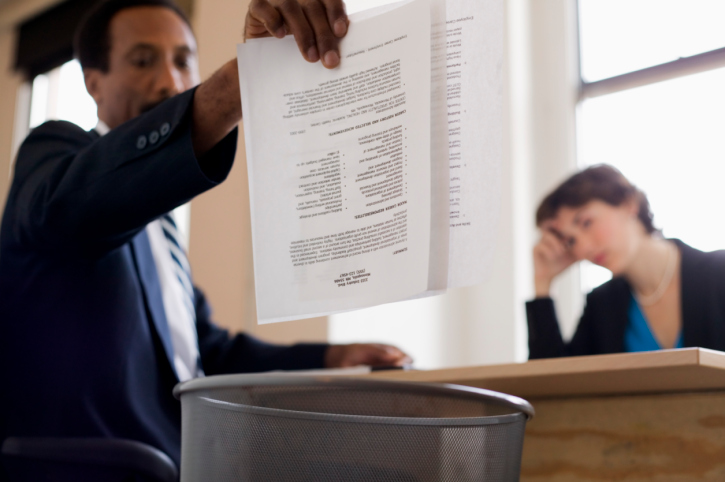
Social rejection can occur at any age and includes:
- Bullying or exclusion in school or workplace settings
- Being ostracized from social groups
- Experiencing discrimination or prejudice
- Social isolation due to lifestyle differences
Romantic Rejection
Rejection in romantic contexts can be particularly painful and includes:
- Being turned down for dates
- Experiencing breakups or divorce
- Unrequited love situations
- Emotional withdrawal within relationships
Professional Rejection
Career-related rejection may involve:
- Job application rejections
- Being passed over for promotions
- Negative performance evaluations
- Professional criticism or feedback
You don’t have to work through this alone
A therapist can help you understand the pain of rejection, rebuild confidence, and feel more secure in your relationships. Search by location, specialty, and insurance to find someone who fits.
Find a TherapistRejection Sensitivity and Mental Health
Understanding Rejection Sensitivity
Rejection sensitivity (RS) has widely been considered unidimensional: the product sum of elevated (i) concern and (ii) expectation of rejection in social situations. Recent research suggests that rejection concern and expectancy are distinct constructs. This study aims to explore the role of Repetitive negative thinking (RNT) as a mediator between rejection concern versus expectancy and clinical outcomes, hypothesising distinct relationships for each RS construct.
People with high rejection sensitivity tend to:
- Anxiously expect rejection in social situations
- Readily perceive ambiguous social cues as rejection
- React intensely to actual or perceived rejection
- Experience difficulty recovering from rejection episodes
Mental Health Impacts
Rejection sensitivity has been linked to various mental health challenges:
Depression: Rejection sensitivity has been found to predict the course of unipolar depression as well as key outcomes, but has not yet been considered within bipolar disorder. The present study investigated the effects of rejection sensitivity on outcome in bipolar disorder.
Anxiety: Based on the Rejection Sensitivity Model, the Experiential Avoidance Model, and the Affect Regulation Model of Self-Injury, this study aimed to explain how rejection sensitivity was related to NSSI among adolescents by unraveling the mediating role of social anxiety and the moderating role of regulatory emotional self-efficacy (RESE) in this relationship. A three-wave longitudinal investigation with a three-month interval was conducted among 726 adolescents.
Self-Harm Behaviors: Early adolescents are at high risk for non-suicidal self-injurious behavior (NSSI). Based on the Rejection Sensitivity Model, the Experiential Avoidance Model, and the Affect Regulation Model of Self-Injury, this study aimed to explain how rejection sensitivity was related to NSSI among adolescents.
ADHD and Rejection Sensitive Dysphoria
What Is Rejection Sensitive Dysphoria?
Rejection sensitive dysphoria (RSD) is when a person feels intense emotional pain related to rejection. The word "dysphoria" comes from an ancient Greek word that describes a strong — if not overwhelming — feeling of pain or discomfort.
For individuals with ADHD, rejection sensitivity can manifest as rejection sensitive dysphoria (RSD), characterized by:
- Extreme emotional pain in response to real or perceived rejection
- Rapid mood shifts triggered by criticism or failure
- Intense feelings of shame or worthlessness
- Difficulty regulating emotional responses
ADHD and Emotional Dysregulation
Most participants reported that the diagnostic criteria did not accurately capture their experiences with ADHD. They reported struggling with attention dysregulation, including hyperfocusing, and emotional dysregulation, including rejection-sensitive dysphoria. Many participants believed that their changing environments and behavioral adaptations influenced how their symptoms presented into adulthood. Current diagnostic criteria for ADHD may not capture the range of symptoms present in young adults. More research is needed to characterize attentional and emotional dysregulation in this population.
The Neurodivergent Experience
All participants began their exploration of RSD with the belief that it directly related to being ND, indeed for one participant it was RSD that had led them to pursue a diagnosis. Participants reflected that their neurodivergence caused 'big emotions' which was likely to significantly impact their RSD. This is a commonly reported neurodivergent trait and may impact on a fear of rejection and an overinterpretation of others' intentions. However, the line between these emotions and when it was deemed RSD was unclear. Over recent years the term RSD has grown in popularity, especially among the neurodivergent community. Informally it is discussed as a feature of neurodivergence, especially autism and ADHD, which presents as a predisposition to expect, sense, and react strongly to rejection.
Brain Differences in ADHD
Experts aren't sure exactly why RSD happens. But they suspect it involves issues with the structure of your brain and that it happens for similar reasons as ADHD. They also know that the brain of someone with ADHD doesn't regulate internal communication the same way as the brain of someone without ADHD. The brain areas that filter and regulate signals aren't as active. This means there's less of a filter on brain activity. This difference in regulating internal communication is why people with ADHD commonly have trouble processing information from their senses. It also makes them prone to feeling overwhelmed by loud noises, bright lights or sudden changes in what's happening around them. The brain of someone with ADHD might not be able to regulate pain-like activity, which would explain why rejection is so much more troubling and painful to someone with RSD.
This condition is linked to ADHD and experts suspect it happens due to differences in brain structure. Those differences mean your brain can't regulate rejection-related emotions and behaviors, making them much more intense.
Treatment and Coping Strategies
Evidence-Based Psychotherapy Approaches
Cognitive Behavioral Therapy (CBT): Secondary outcomes included, among others, the rate of response (defined as a reduction of the HRSD-24 score by at least 50% from baseline and a score <16 at post-treatment), the rate of remission (defined as a HRSD-24 score ≤8 at post-treatment), and improvements in early trauma-related mechanisms of social threat response, hyperarousal, and social processes/empathy. Both approaches led to major reductions of depressive symptoms at post-treatment, with a non-significant superiority of MoBa over CBT. Patients randomized to MoBa were nearly three times as likely to experience remission at the end of therapy (29.4% vs.
CBT helps individuals:
- Identify and challenge negative thought patterns about rejection
- Develop more balanced perspectives on social situations
- Learn coping skills for managing emotional responses
- Build confidence in social interactions
Acceptance and Commitment Therapy (ACT): Based on the results of the analysis, it can be concluded that CBT and ACT can be considered in cognitive distortions and rumination in adolescents with SAD.
ACT focuses on:
- Accepting difficult emotions without judgment
- Developing psychological flexibility
- Clarifying personal values
- Taking committed action despite fear of rejection
Mindfulness-Based Interventions: Mindfulness practices provide a counterbalance to the fear of rejection by emphasizing the importance of living in the present moment. Cultivating mindfulness enables individuals to observe and accept thoughts and emotions without judgment. This detachment from anxious thoughts fosters inner calm and self-compassion. Mindfulness practices don't ignore the feeling but view them as temporary experiences that come and go, which are influenced by beliefs that are often not rational.
Medication Options
For individuals with severe rejection sensitivity, particularly those with ADHD, medication may be helpful:
- ADHD medications: Can help improve emotional regulation
- Antidepressants: May reduce overall emotional reactivity
- Alpha-2 agonists: Individuals with RSD have tended to respond favorably to alpha-2 agonists.
Self-Help Strategies
1. Practice self-compassion: Treat yourself with the same kindness you would show a friend
2. Build a support network: Cultivate relationships with accepting, supportive people
3. Develop emotional awareness: Learn to recognize early signs of rejection sensitivity
4. Challenge negative self-talk: Question automatic negative assumptions
5. Engage in regular self-care: Maintain physical and mental health through exercise, sleep, and nutrition
Frequently Asked Questions
Is rejection sensitivity the same as social anxiety?
While rejection sensitivity and social anxiety often co-occur and share some features, they are distinct experiences. Social anxiety involves fear of social situations and being judged, while rejection sensitivity specifically focuses on the expectation and intense reaction to rejection. Many people with rejection sensitivity don't have social anxiety, and vice versa.
Can rejection sensitivity be cured?
While rejection sensitivity tends to be a relatively stable trait, it can be significantly improved with appropriate treatment. Through therapy, individuals can learn to manage their reactions to rejection, develop healthier thought patterns, and build resilience. The goal is not necessarily to eliminate sensitivity but to develop effective coping strategies.
How do I know if I have rejection sensitive dysphoria?
RSD is characterized by extreme emotional pain in response to rejection that feels unbearable and disproportionate to the situation. If you experience intense mood shifts, physical pain sensations, or suicidal thoughts in response to criticism or perceived rejection, especially if you have ADHD, you may be experiencing RSD. Consult with a mental health professional for proper assessment.
What's the difference between normal rejection pain and rejection sensitivity?
Everyone feels hurt by rejection, but people with high rejection sensitivity experience more intense, longer-lasting pain that significantly interferes with daily functioning. They may also perceive rejection in neutral or ambiguous situations and have difficulty recovering from rejection experiences.
Can children have rejection sensitivity?
Yes, children can experience rejection sensitivity, and it often begins in childhood. Dealing with social rejection is challenging, especially during childhood when behavioral and neural responses to social rejection are still developing. In the current longitudinal study, we used a Bayesian multilevel growth curve model to describe individual differences in the development of behavioral and neural responses to social rejection in a large sample (n > 500). We found a peak in aggression following negative feedback (compared to neutral feedback) during late childhood, as well as individual differences during this developmental phase, possibly suggesting a sensitive window for dealing with social rejection across late childhood.
Are there any benefits to being rejection sensitive?
While rejection sensitivity can be challenging, some researchers suggest it may have adaptive qualities, such as heightened social awareness and empathy. People with rejection sensitivity may be particularly attuned to others' emotions and skilled at reading social cues, though they may misinterpret neutral cues as negative.
How Therapy Can Help
Working with a qualified mental health professional can provide invaluable support for managing rejection sensitivity and healing from rejection-related wounds. A therapist can help you:
- Understand your patterns: Identify triggers and recognize how past experiences influence current reactions
- Develop coping skills: Learn evidence-based techniques for managing intense emotions
- Process past trauma: Work through childhood experiences that may contribute to rejection sensitivity
- Build self-esteem: Develop a stronger sense of self-worth independent of others' opinions
- Improve relationships: Learn healthier communication patterns and boundary-setting skills
Finding the Right Therapist
When seeking therapy for rejection-related issues, look for professionals who:
- Have experience with trauma-informed care
- Understand ADHD and neurodivergence (if applicable)
- Use evidence-based approaches like CBT or ACT
- Create a safe, non-judgmental therapeutic environment
- Demonstrate cultural competence and sensitivity
Find a Therapist who specializes in rejection sensitivity, trauma, or ADHD through the GoodTherapy directory.
Remember, seeking help is a sign of strength, not weakness. With appropriate support and treatment, individuals can learn to manage rejection sensitivity, build resilience, and develop more fulfilling relationships.
Do you help clients heal from rejection?
People working through rejection, self-esteem, and relationship wounds are searching for a therapist right now. A GoodTherapy profile helps them find you.
Sign Up and Get ListedReferences:
- American Psychological Association. (2024). Clinical practice guideline for the treatment of depression across three age cohorts. https://www.apa.org/depression-guideline/guideline.pdf
- Cleveland Clinic. (2025, October 29). Rejection sensitive dysphoria (RSD): Symptoms & treatment. https://my.clevelandclinic.org/health/diseases/24099-rejection-sensitive-dysphoria-rsd
- Dodson, W. W., Modestino, E. J., Ceritoğlu, H. T., & Zayed, B. (2024). Rejection sensitivity dysphoria in attention-deficit/hyperactivity disorder: A case series. Acta Scientific Neurology, 7(8), 23-30.
- Ebrahimi, S., & Moheb, N. (2024). Comparison of the effectiveness of cognitive-behavioral therapy and acceptance and commitment therapy on cognitive distortions and rumination in adolescents with social anxiety disorder. Journal of Practice in Clinical Psychology, 12(1), 81-94. https://doi.org/10.32598/jpcp.12.1.922.1
- Eisenberger, N. I. (2012). The neural bases of social pain: Evidence for shared representations with physical pain. Psychosomatic Medicine, 74(2), 126-135. https://doi.org/10.1097/PSY.0b013e3182464dd1
- Gao, S., Assink, M., & Bi, C. (2023). Child maltreatment as a risk factor for rejection sensitivity: A three-level meta-analytic review. Clinical Psychology Review, 101, 102272. https://doi.org/10.1016/j.cpr.2023.102272
- Ginapp, C. M., Greenberg, N. R., MacDonald-Gagnon, G., Angarita, G. A., Bold, K. W., & Potenza, M. N. (2023). "Dysregulated not deficit": A qualitative study on symptomatology of ADHD in young adults. PLoS ONE, 18(10), e0292721. https://doi.org/10.1371/journal.pone.0292721
- Johns Hopkins Medicine. (2025, October 1). Treatment-resistant depression. https://www.hopkinsmedicine.org/health/conditions-and-diseases/mood-disorders/treatment-resistant-depression
- Lopez, R., Jr., Esposito-Smythers, C., Defayette, A. B., Harris, K. M., Seibel, L., & Whitmyre, E. D. (2024). Relations between discrimination, rejection sensitivity, negative affect, and decrements in problem-solving ability following social rejection: An experimental investigation. Suicide and Life-Threatening Behavior, 54(2), 233-249. https://doi.org/10.1111/sltb.13036
- Lord, K. A., et al. (2025). Repetitive negative thinking as a pathway from rejection sensitivity to poorer mental health: The role of expectancy versus concern. Cognitive Therapy and Research, 49(1), 127-142. https://doi.org/10.1007/s10608-025-10611-3
- Mulder, J. D., Dobbelaar, S., Achterberg, M., et al. (2024). Behavioral and neural responses to social rejection: Individual differences in developmental trajectories across childhood and adolescence. Developmental Cognitive Neuroscience, 66, 101365. https://doi.org/10.1016/j.dcn.2024.101365
- Ng, T. H., & Johnson, S. L. (2023). Rejection sensitivity is associated with quality of life, psychosocial outcome, and the course of depression in euthymic patients with bipolar I disorder. International Journal of Bipolar Disorders, 11(1), 27. https://doi.org/10.1186/s40345-023-00308-5
- Sandland, B. (2025). Neurodivergent experiences of rejection sensitive dysphoria expose the environmental factors too often overlooked. Journal of ADHD & Autism, 17(3), 127-143. https://doi.org/10.1177/27546330251394516
- Schramm, E., et al. (2024). Algorithm-based modular psychotherapy vs. cognitive-behavioral therapy for patients with depression, psychiatric comorbidities and early trauma: A proof-of-concept randomized controlled trial. World Psychiatry, 23(2), 187-195. https://doi.org/10.1002/wps.21204
- Substance Abuse and Mental Health Services Administration. (2025). 2024 NSDUH: Mental health treatment among people who had a mental health condition in the past year. https://www.samhsa.gov/data/report/nsduh-2024-pst-yr-mhtx-adult-adol
- Woo, C. W., Koban, L., Kross, E., et al. (2014). Separate neural representations for physical pain and social rejection. Nature Communications, 5, 5380. https://doi.org/10.1038/ncomms6380
- Zhao, J., et al. (2024). How is rejection sensitivity linked to non-suicidal self-injury? Exploring social anxiety and regulatory emotional self-efficacy as explanatory processes in a longitudinal study of Chinese adolescents. Behavioral Sciences, 14(10), 943. https://doi.org/10.3390/bs14100943
